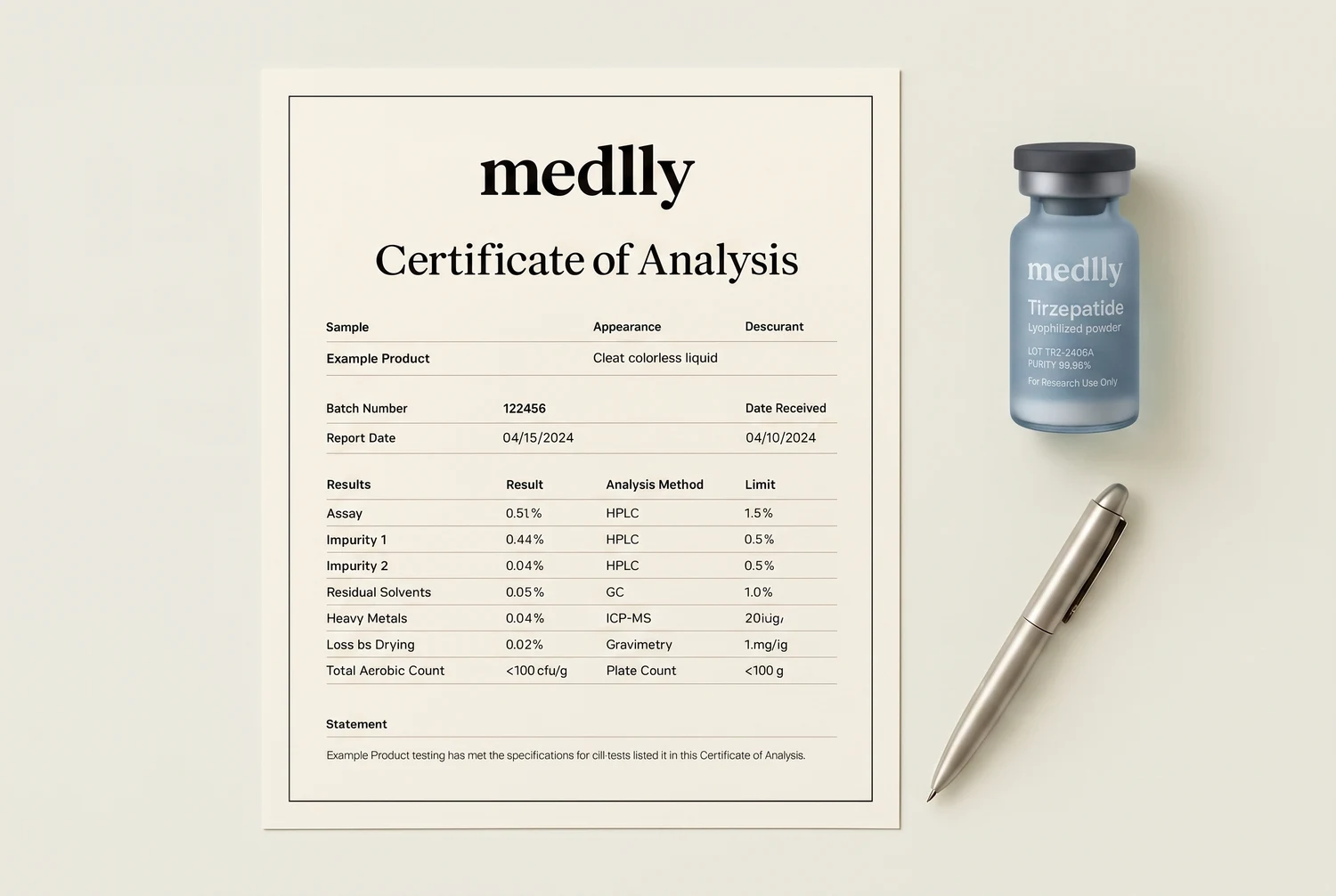
Cold-chain handling and storage of lyophilized material
Lyophilized peptides are shipped dry and cold for a reason. A few habits at the bench keep a lot stable and keep its documentation meaningful.
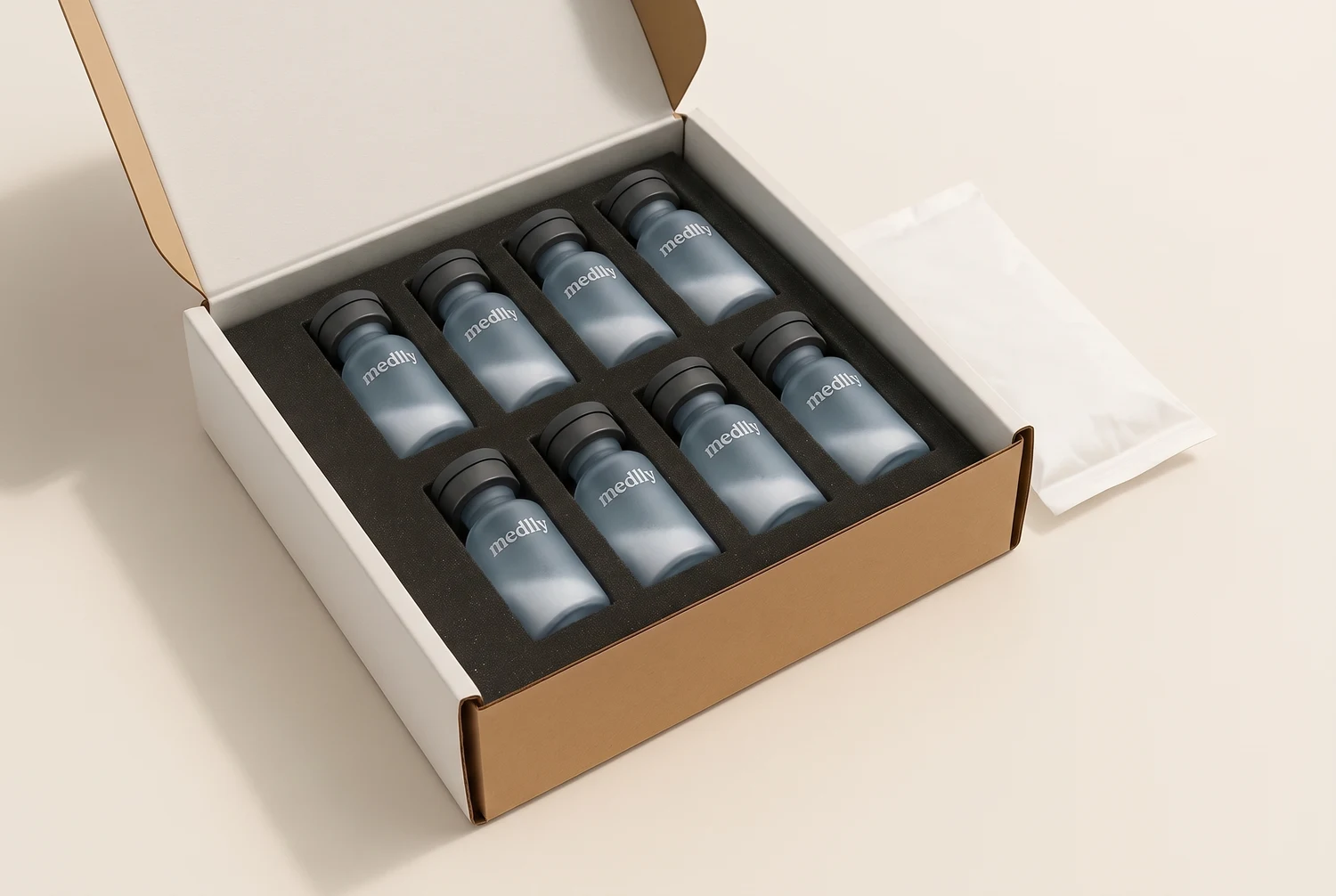
Materials are supplied as lyophilized, or freeze-dried, powder and shipped cold in protective packaging. Lyophilization removes water, which is what allows the material to be stored stably; the cold chain protects it in transit. Once a lot arrives, a handful of standard laboratory habits keep it in the condition its certificate describes.
On arrival
Check the packaging and confirm the lot number on the vial against the documentation that accompanies the order. Move the material into storage promptly at the temperature noted on the product page. Keeping receiving records, including the date and the lot, is good practice and makes later traceability straightforward.
Storage conditions
Store lyophilized material cold and sealed, following the storage line on the product page for that compound. Protect it from light and from moisture, both of which are the usual sources of degradation for dry peptides. A consistent, low temperature and an intact seal are the two factors that matter most for keeping a lot stable over time.
Avoiding condensation
When a sealed, cold vial is opened in a warmer room, moisture can condense onto the contents. Allowing a sealed vial to equilibrate toward room temperature before opening reduces that risk. Minimizing the number of times a vial is opened, and the time it spends open, also limits exposure to ambient humidity.
Labeling and segregation
Label research materials clearly and keep them segregated within the facility according to your own institutional policies. Clear labels that preserve the lot number keep each container tied to its certificate, which is the link that makes the analytical documentation useful well after the box is unpacked.