How to read a Certificate of Analysis
A Certificate of Analysis records what an independent lab measured for one specific lot. Here is what each section reports and how to match it to the vial in your hand.
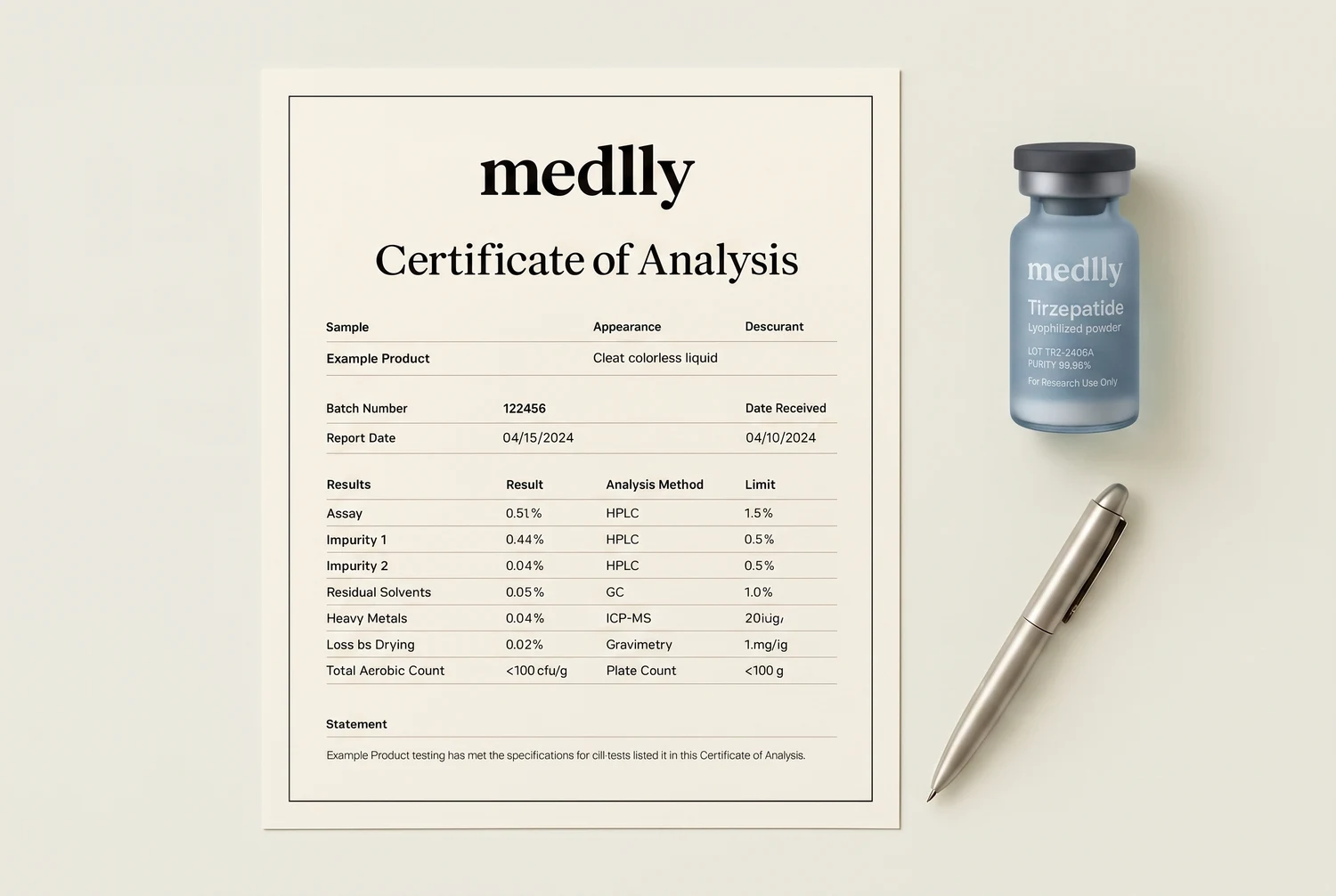
A Certificate of Analysis, or COA, is the analytical record for a single production lot. It states what an independent laboratory measured for that lot, by which method, and on what date. It is a document about identity and quality, and it makes no statement about use. Reading one is mostly a matter of knowing what each section is for.
The header: what lot this describes
At the top, a COA names the compound, the lot number, and the dates of manufacture and testing. The lot number is the anchor for everything below it. Because certificates are issued per lot, the document you are reading only describes the material carrying that exact lot number, and nothing else.
Identity
The identity row confirms that the material is the named compound. This is typically established by mass spectrometry, which measures molecular mass and compares it against the expected value. A pass here means the analysis is consistent with the stated compound; it is a statement about what the material is, not about what it does.
Purity and assay
Purity, or assay, reports the fraction of the sample that is the target compound, usually measured by high-performance liquid chromatography (HPLC) and expressed as a percentage. The figure describes the composition of that lot. A higher number means a larger measured fraction of the named compound; it carries no clinical or performance meaning.
Mass, endotoxin, and appearance
Mass verifies the measured molecular weight against the expected value. Endotoxin is screened by an LAL assay and reported either as a quantity or as a pass against a limit. Appearance records the physical form and color of the lyophilized material. Together these give a rounded picture of the lot as supplied.
Specification, signature, and lab
Each result sits next to a specification, the acceptance range agreed in advance, and is marked as within or outside it. The certificate also names the testing laboratory and carries an authorizing signature or identifier. The presence of an independent lab name is what separates a third-party COA from a self-declared spec sheet.
Matching the document to the vial
The final, practical step is to read the lot number printed on the vial and confirm it matches the lot number on the certificate. If the two agree, the analytical data on the page describes the material in front of you. If you need the COA for a lot you received earlier, the lot number is all support needs to retrieve it.