Resources
The documentation, explained for the bench.
Reference guides to the paperwork and analytical methods behind every lot. How to read a Certificate of Analysis, what each test on the panel measures, and how to handle and trace research materials. Reference only, never clinical.
Browse by topic
The full reference library, grouped by what each guide covers.
Documentation
Reading the paperwork that travels with every lot.
 5 min read
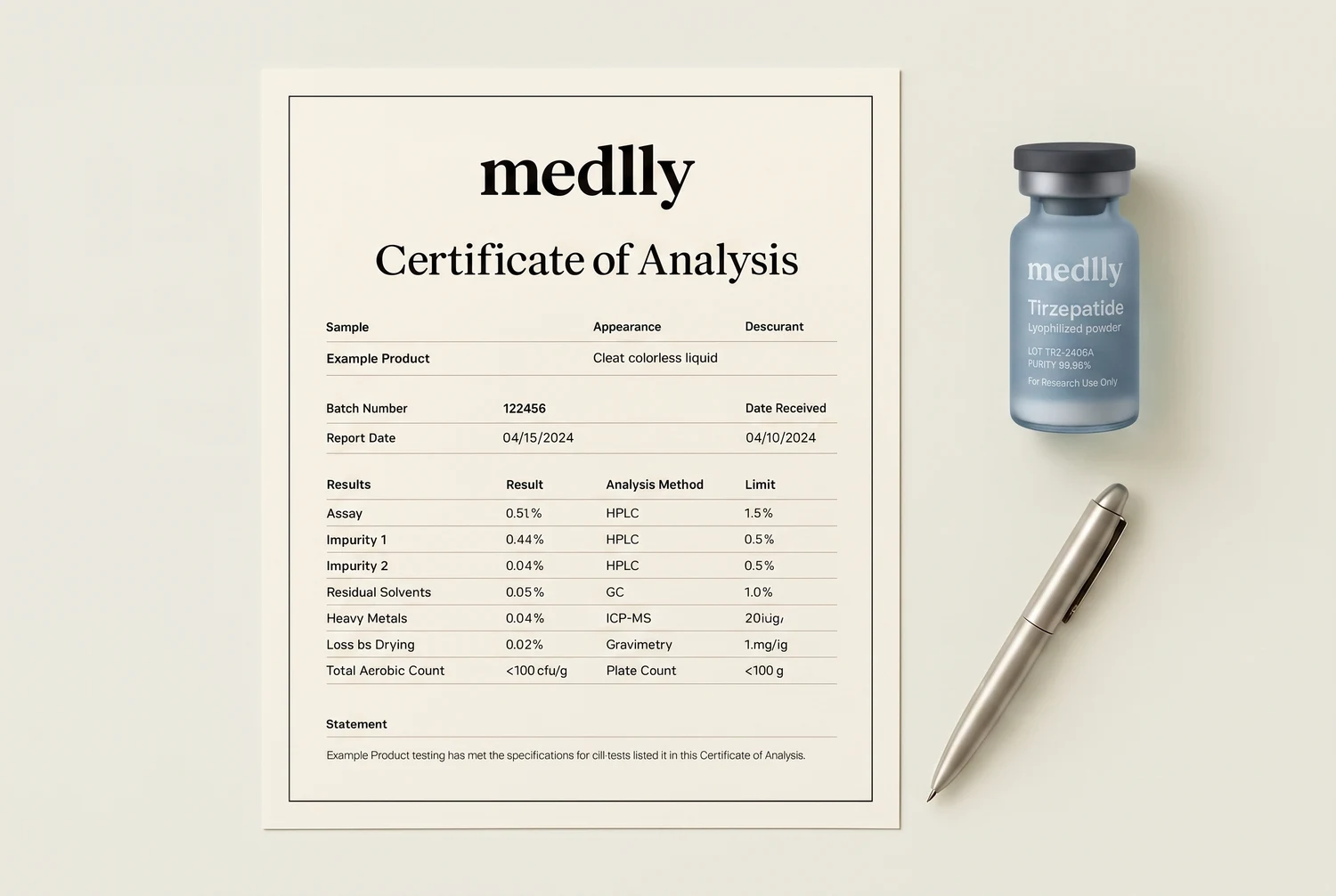
How to read a Certificate of Analysis
A Certificate of Analysis records what an independent lab measured for one specific lot. Here is what each section reports and how to match it to the vial in your hand.
Read the guide 4 min read
What third-party testing means
A certificate is only as independent as the laboratory behind it. Here is what third-party testing means, and why an outside lab's name on a COA carries weight a self-declared spec sheet does not.
Read the guide 4 min read
Retest dates and how a lot is dated
A certificate carries several dates, and the retest date is the one researchers ask about most. Here is what each date means, and what a retest date does and does not imply.
Read the guide
Analytical methods
What each test on the panel actually measures.
 5 min read
HPLC and mass spec: what each analysis measures
Two methods appear on almost every certificate. One answers how much of the target compound is present; the other answers whether it is the right compound at all.
Read the guide 4 min read
Endotoxin testing, explained
Endotoxin is one of the measures on the standard panel. Here is what it screens for, how it is measured, and how the result is reported.
Read the guide 4 min read
Water content and the Karl Fischer test
Water content is one of the measures on the panel for lyophilized material. Here is what it tracks, how the Karl Fischer titration measures it, and how the result is reported.
Read the guide 4 min read
Sterility and compendial testing for solutions
Solution products are checked differently from lyophilized powders. Here is what a sterility or compendial line on a certificate records, and why it appears in place of water content.
Read the guide
Specifications
How acceptance criteria are set and reported.
 4 min read
What "within specification" means
A specification is a set of acceptance criteria agreed before testing. A result is within specification when it falls inside that range. It is a statement about conformance, nothing more.
Read the guide 3 min read
Reading appearance on a certificate
Appearance is the simplest line on a certificate and the easiest first check when a lot arrives. Here is what it records and how to use it.
Read the guide
Handling & storage
Keeping lyophilized material stable on the bench.

Traceability
Matching the vial in hand to its certificate.
 4 min read
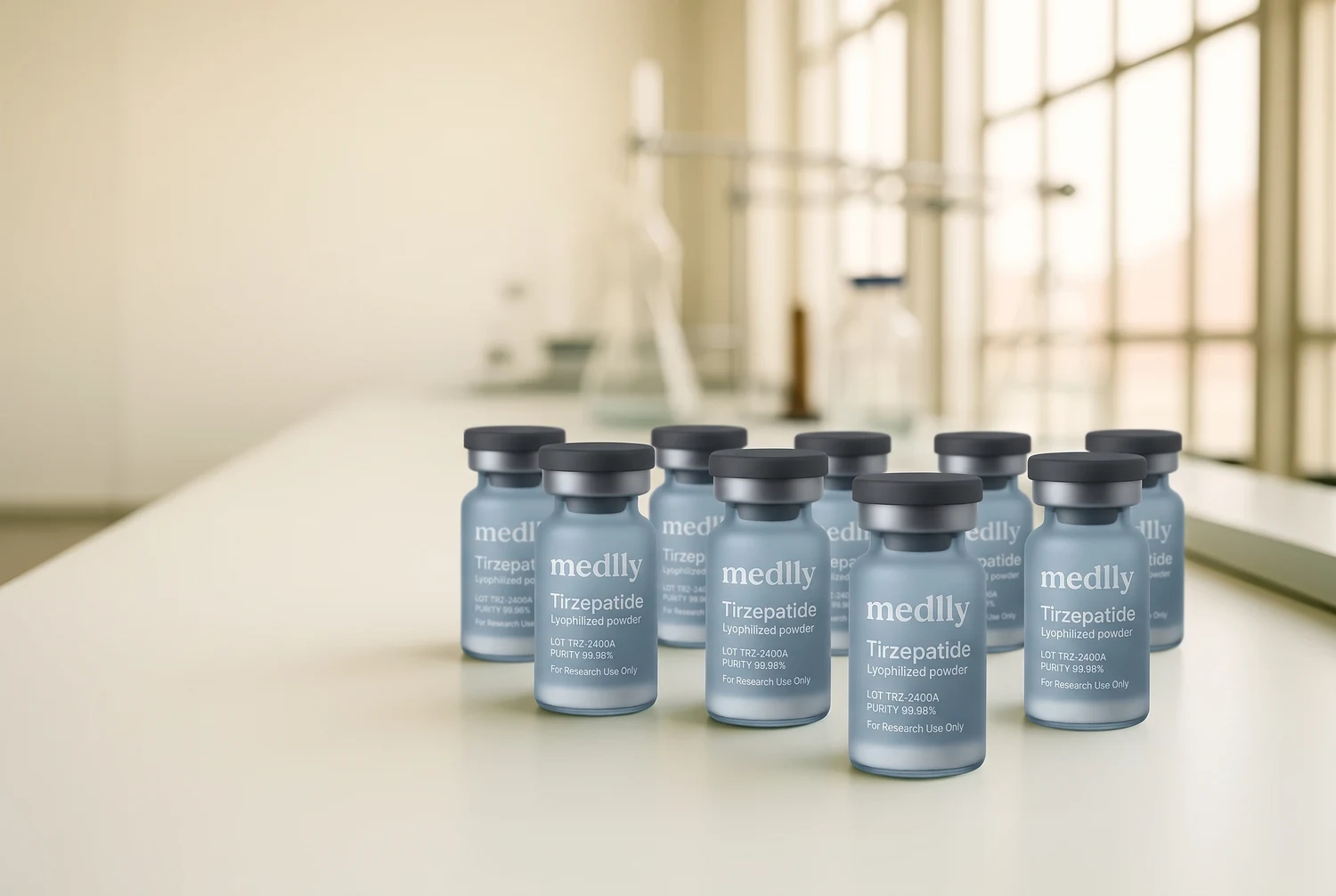
Lot numbers and traceability
A lot number is the thread that connects a vial, its certificate, and your own records. Here is what a lot is and why each one is documented separately.
Read the guide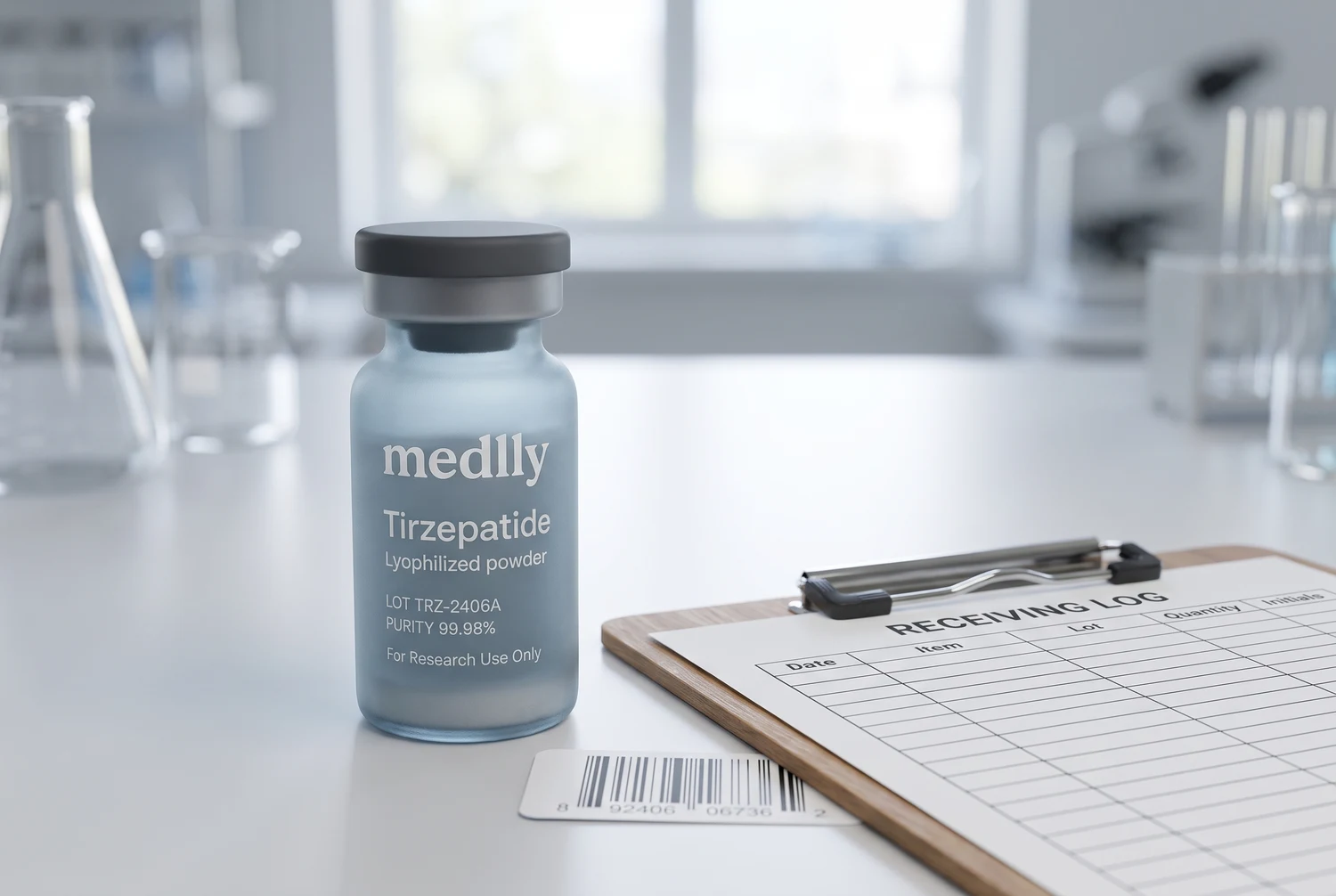 4 min read
Receiving records and chain of custody
Traceability does not end when a lot ships. A short receiving routine keeps a lot tied to its certificate inside your own facility.
Read the guide