What "within specification" means
A specification is a set of acceptance criteria agreed before testing. A result is within specification when it falls inside that range. It is a statement about conformance, nothing more.

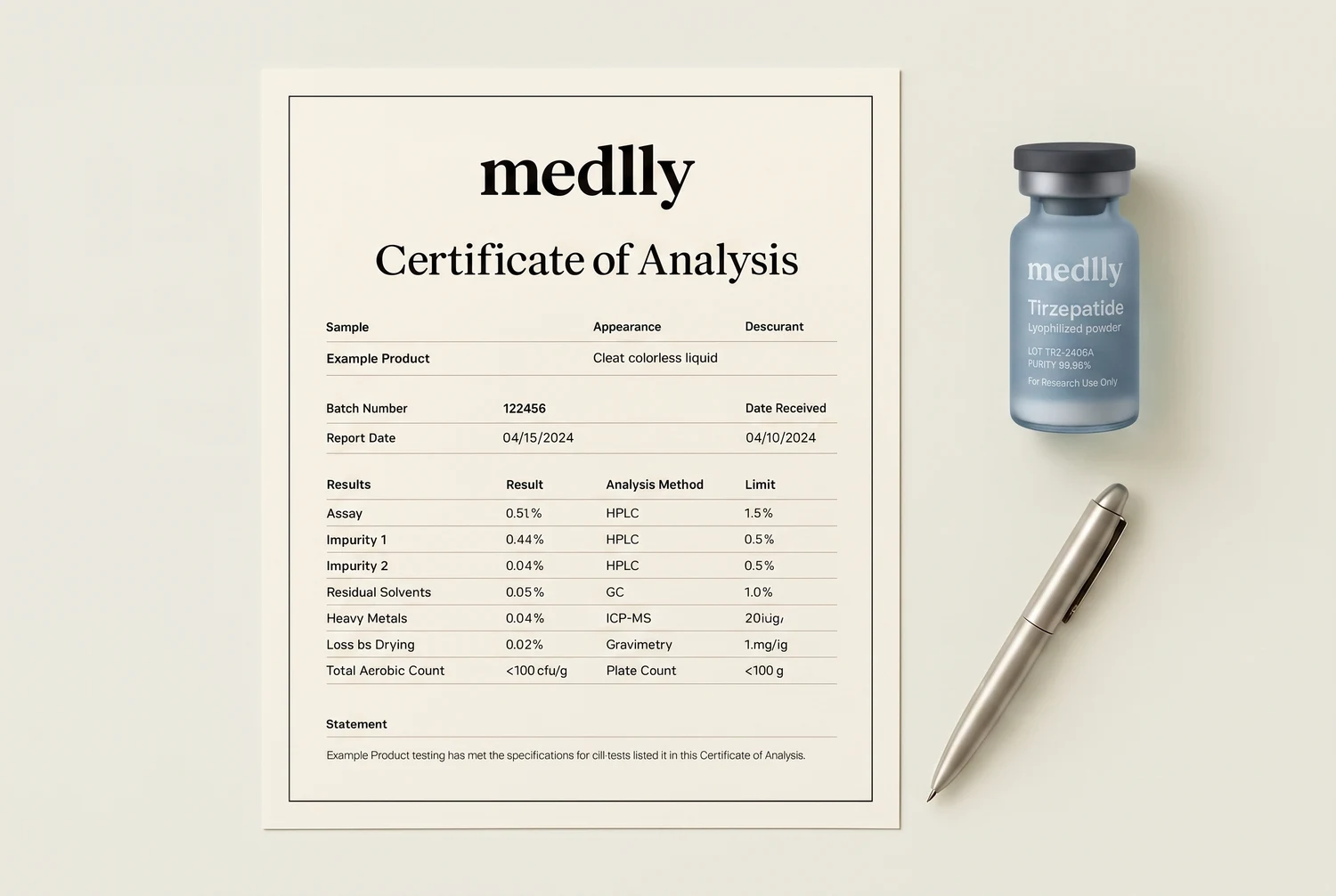
The phrase within specification appears on every certificate, and it has a precise, narrow meaning. A specification is a set of acceptance criteria established before a lot is tested. When a measured result falls inside the agreed range, the result is within specification. When it falls outside, it is out of specification. That is the entire scope of the term.
Specifications are set in advance
Acceptance criteria are defined ahead of testing, not chosen after the result is known. For purity that might be a minimum percentage; for endotoxin a maximum limit; for mass a tolerance around an expected value. Fixing the criteria first is what makes a pass meaningful, because the result is judged against a standard rather than against itself.
Conformance, not quality grading
Within specification is binary: a result either meets the criteria or it does not. It is not a ranking and not a score. A lot that meets every criterion is within specification regardless of how comfortably it cleared each one. The certificate reports the actual measured values alongside the verdict, so the underlying numbers remain visible.
What it deliberately does not say
Because a specification is an analytical standard, conformance speaks only to identity and quality as measured. It does not describe how a material behaves in any application, and it is never a statement that something is optimal, effective, or suitable for a purpose. Those questions are outside what an analytical certificate addresses.