HPLC and mass spec: what each analysis measures
Two methods appear on almost every certificate. One answers how much of the target compound is present; the other answers whether it is the right compound at all.
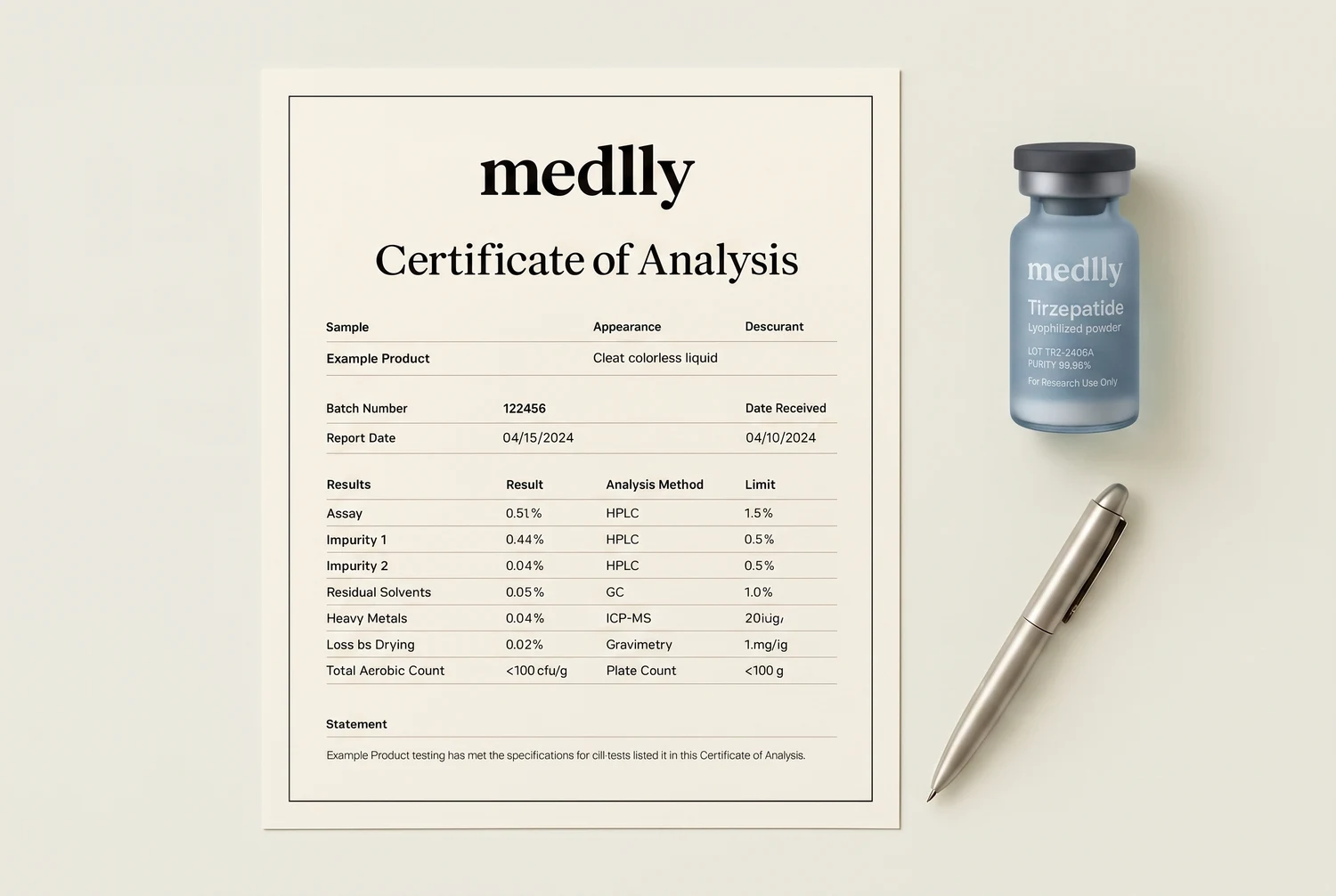
Most certificates lean on two analytical techniques: high-performance liquid chromatography (HPLC) and mass spectrometry (MS). They are complementary. HPLC tells you how much of the target compound is in the sample; MS tells you whether that compound is the one named on the label. Neither says anything about use, and both are purely descriptive measurements.
What HPLC measures
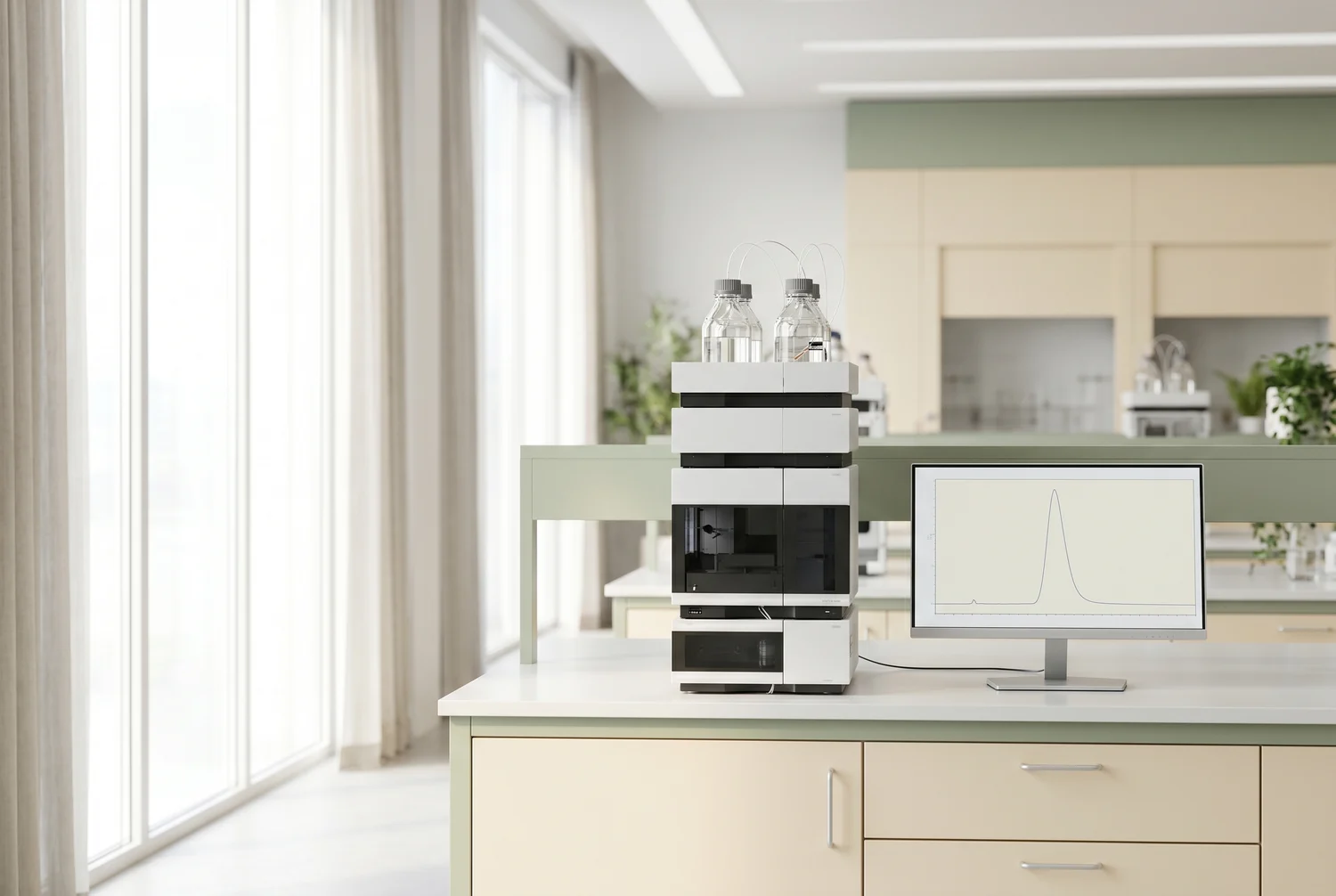
HPLC pushes a dissolved sample through a column that separates its components by how strongly each interacts with the column material. Components come off the column at different times and are recorded as peaks. The area under each peak is proportional to how much of that component is present, so the target compound's share of the total area gives the purity, or assay, figure.
Reading a chromatogram
A chromatogram plots detector signal against time. A clean lot shows one dominant, well-shaped peak for the target compound, with any minor peaks small and well separated. The shape and separation of peaks are part of how an analyst judges the result. On a certificate this analysis is condensed to a single assay percentage, but the underlying trace is what produced it.
What mass spectrometry measures
Mass spectrometry ionizes the molecules in a sample and sorts them by mass-to-charge ratio. The result is effectively a molecular fingerprint. By comparing the measured mass against the value expected for the named compound, the lab confirms identity. A match supports that the material is what it is labeled as; a mismatch flags that it is not.
Why both are reported
Purity without identity, or identity without purity, would each leave an open question. A sample could be highly pure but the wrong compound, or the right compound but heavily diluted. Reporting HPLC and MS side by side closes both questions for a given lot, which is why the two methods recur across the panel.