Endotoxin testing, explained
Endotoxin is one of the measures on the standard panel. Here is what it screens for, how it is measured, and how the result is reported.
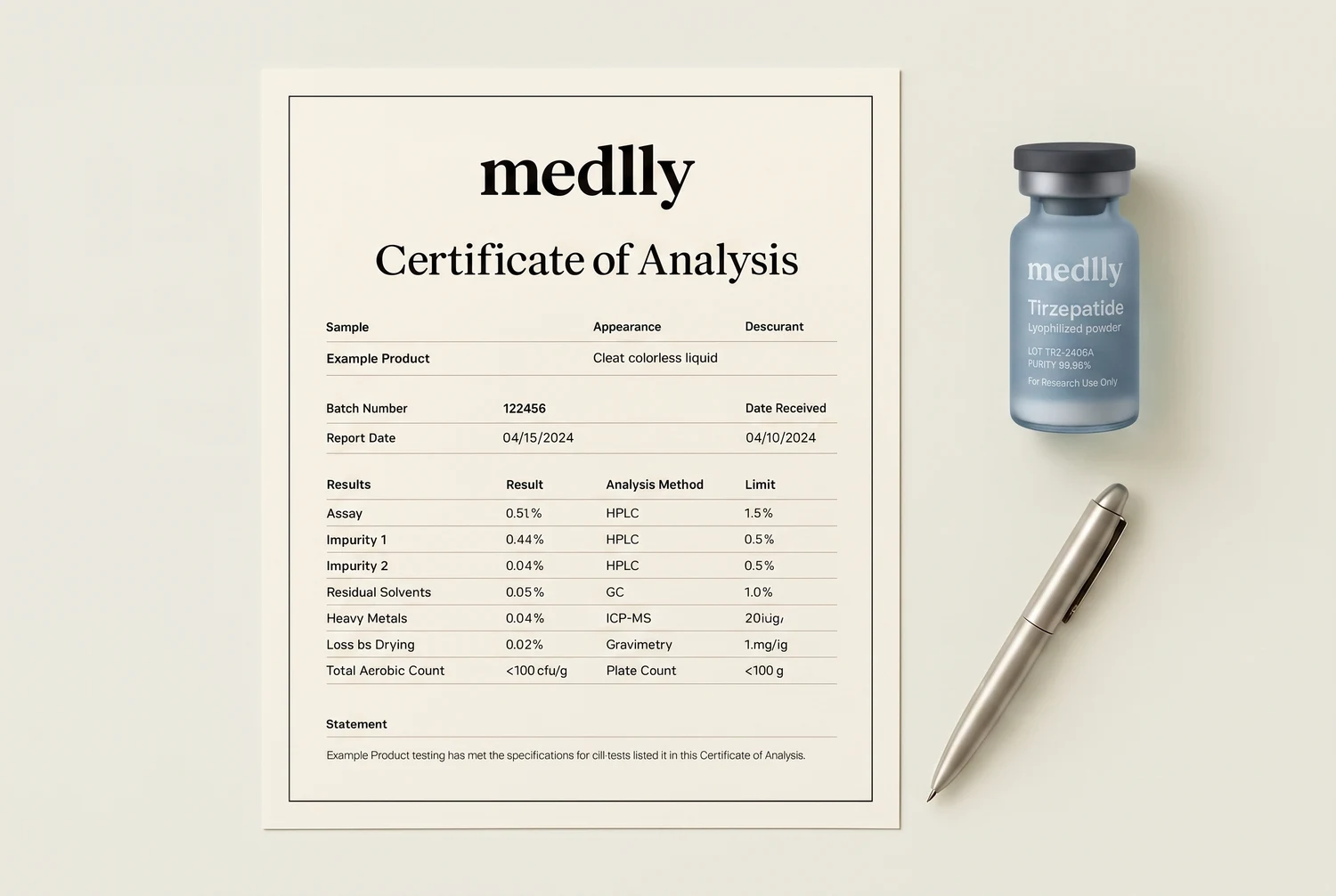
Endotoxin is one of the five measures on the standard analytical panel. It screens a lot for bacterial endotoxin, a class of molecules associated with certain bacteria. On a certificate it is a quality and cleanliness measure, reported the same way as the others: a measured value set against a predefined limit.
What the LAL assay does
The standard method is the Limulus amebocyte lysate, or LAL, assay. It uses a reagent that reacts in the presence of endotoxin, which makes the test highly sensitive to small amounts. The reaction is what the assay measures, and the response is translated into a reported endotoxin level for the sample.
How the result is reported
Depending on the certificate, the endotoxin result appears either as a quantity, often in endotoxin units relative to mass, or as a pass against a maximum limit. Either way the figure is judged against the specification set in advance, so the result is reported as within or outside that limit.
Where it fits on the panel
Identity and purity describe what the compound is and how much of it is present; endotoxin and appearance describe the cleanliness and physical state of the lot as supplied. Reading the endotoxin line alongside the others gives a fuller picture of a single lot, which is the purpose of running the full panel on every batch.