What third-party testing means
A certificate is only as independent as the laboratory behind it. Here is what third-party testing means, and why an outside lab's name on a COA carries weight a self-declared spec sheet does not.
Testing can be done in two broad ways: by the party selling the material, or by an independent laboratory with no stake in the result. Third-party testing means the second. When a Certificate of Analysis names an outside lab, the analytical data on it was produced by an organization separate from the seller, which is the entire point of the exercise.
Independent versus in-house
An in-house spec sheet records what a supplier measured on its own equipment. A third-party certificate records what a separate laboratory measured. Both can be accurate, but only the independent test removes the conflict of interest inherent in grading your own material. That independence is the single most important thing a COA signals.
What the lab's name tells you
A third-party COA names the testing laboratory. That name is verifiable: it identifies a real organization that can be looked up, and it ties the result to a party willing to stand behind it. A certificate with no laboratory named, or with only the seller's name, is a self-declaration rather than an independent analysis.
Accreditation, briefly
Some laboratories hold accreditation to a recognized standard such as ISO/IEC 17025, an external assessment of a lab's competence to run specific methods. Accreditation speaks to the laboratory's capability, not to any single result. Where present, it is one more layer of assurance behind the numbers on the page.
Reading it on the certificate
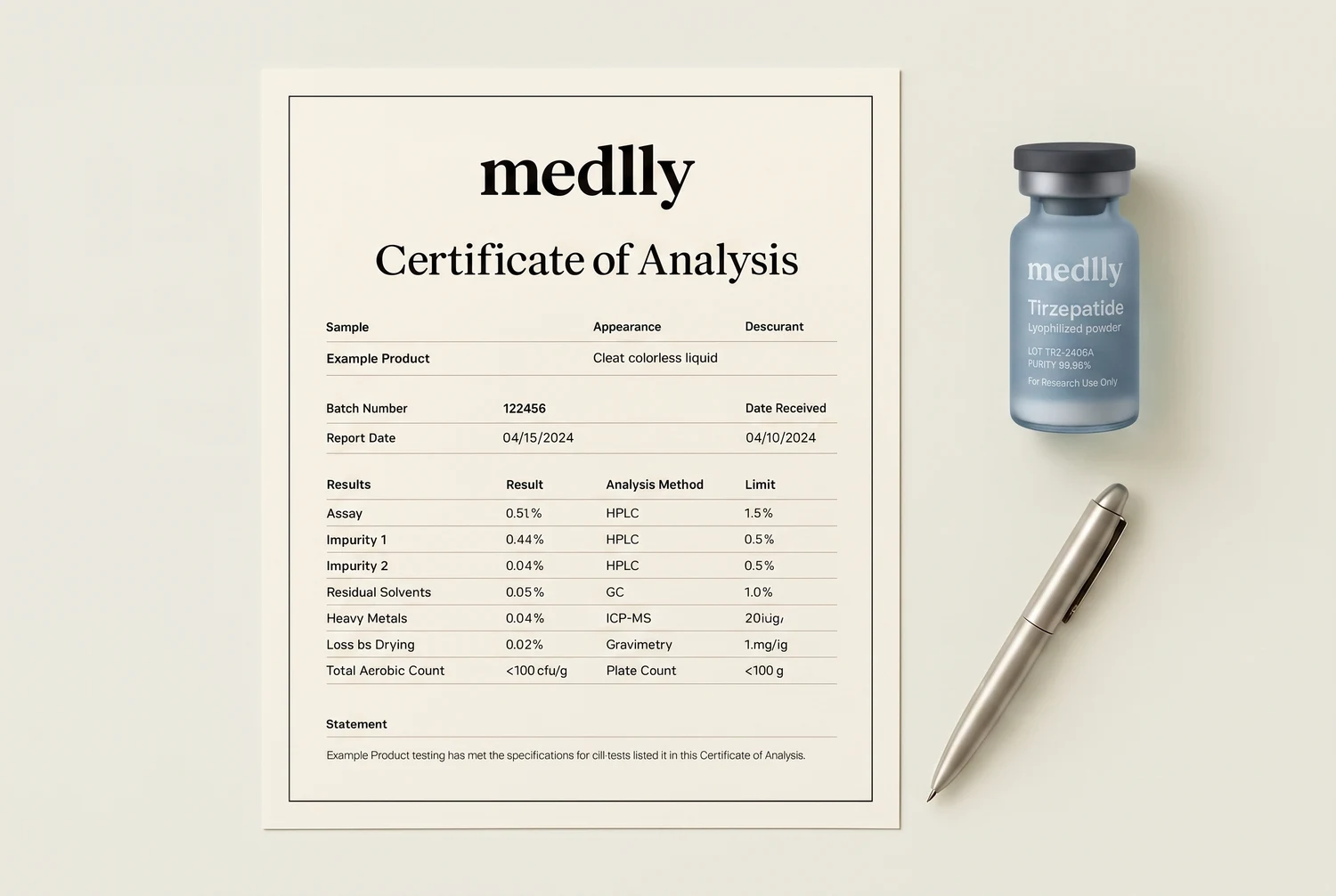
On the document, look for the laboratory's name, the method used for each measurement, and the dates of testing. Together these establish who measured what, how, and when. Matching the lot number on the certificate to the vial then confirms that the independent data describes the material in front of you.