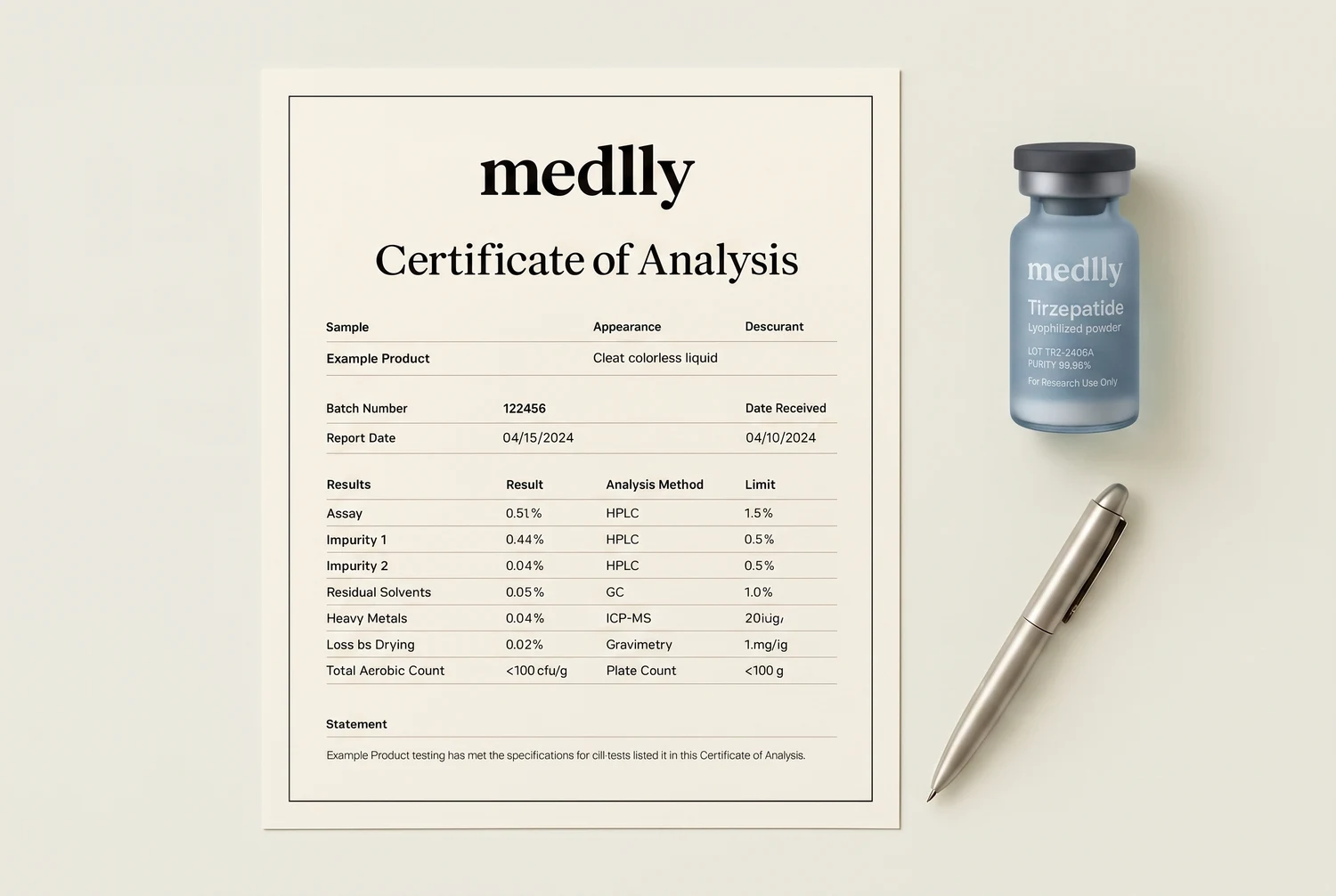
Receiving records and chain of custody
Traceability does not end when a lot ships. A short receiving routine keeps a lot tied to its certificate inside your own facility.
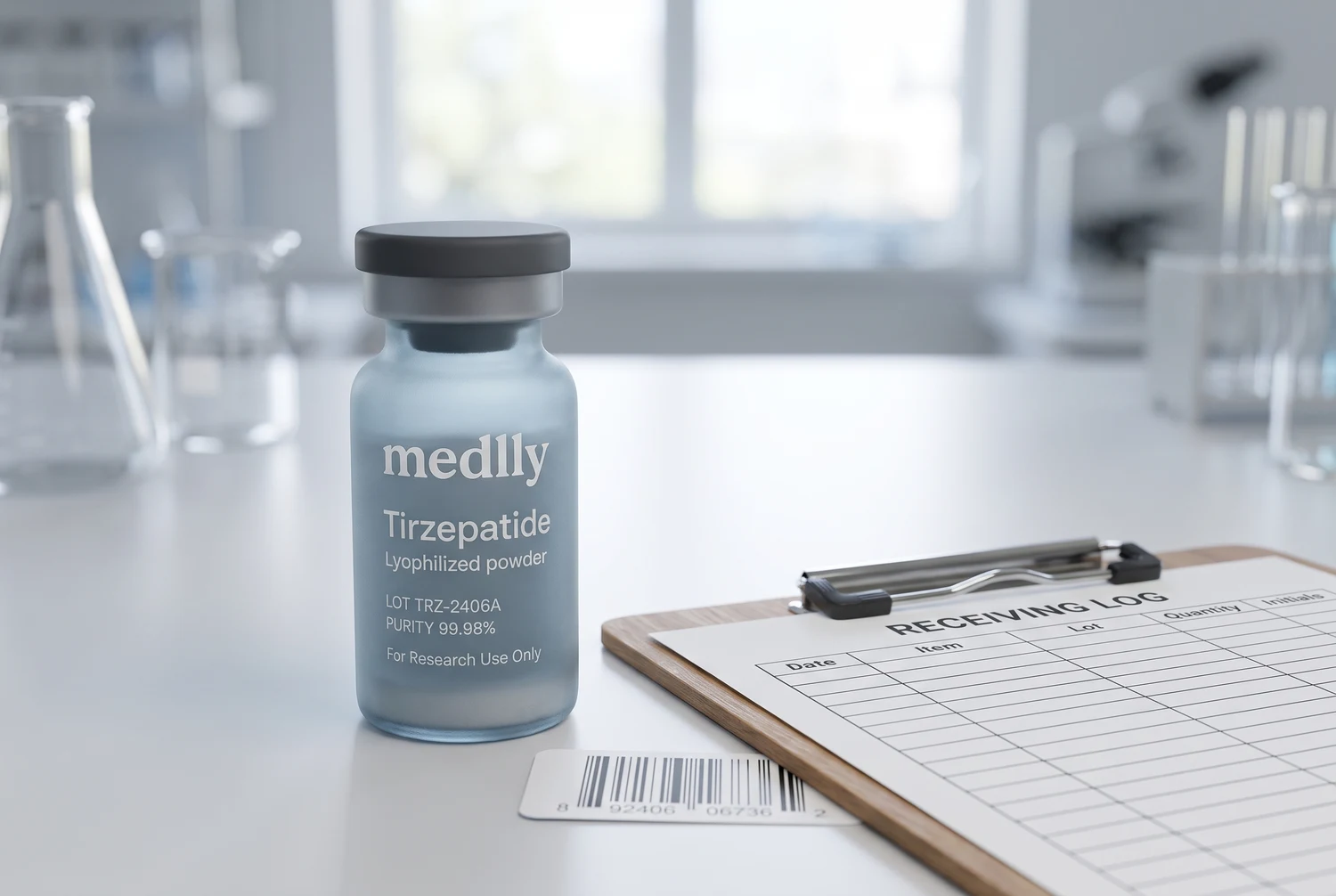
A Certificate of Analysis establishes what an independent lab measured, and the lot number ties that record to the vial. Chain of custody is what extends that link into your own facility. A short, consistent receiving routine is all it takes to keep a lot traceable after it arrives.
What to record on arrival
When a shipment arrives, note the lot number, the date received, the quantity, and the condition of the packaging. Checking the lot printed on the vial against the accompanying documentation at this point confirms, at the outset, that the material matches its certificate.
Keeping a receiving log
A simple receiving log, on paper or in a system, keeps each lot's details in one place. Recording the lot number is the key field, because it is the identifier shared by the vial, the certificate, and any later reference you make to the material.
Segregation and labeling
Keeping research materials clearly labeled and segregated, per your institution's policies, preserves the link between a container and its lot. Labels that retain the lot number are what let anyone tie a container back to its analytical documentation later.
Looking a lot up later
When records are kept, retrieving a certificate is trivial: the lot number alone is enough to pull the canonical COA from the index or from support. Good receiving records turn traceability from a hope into a quick lookup.