Retest dates and how a lot is dated
A certificate carries several dates, and the retest date is the one researchers ask about most. Here is what each date means, and what a retest date does and does not imply.

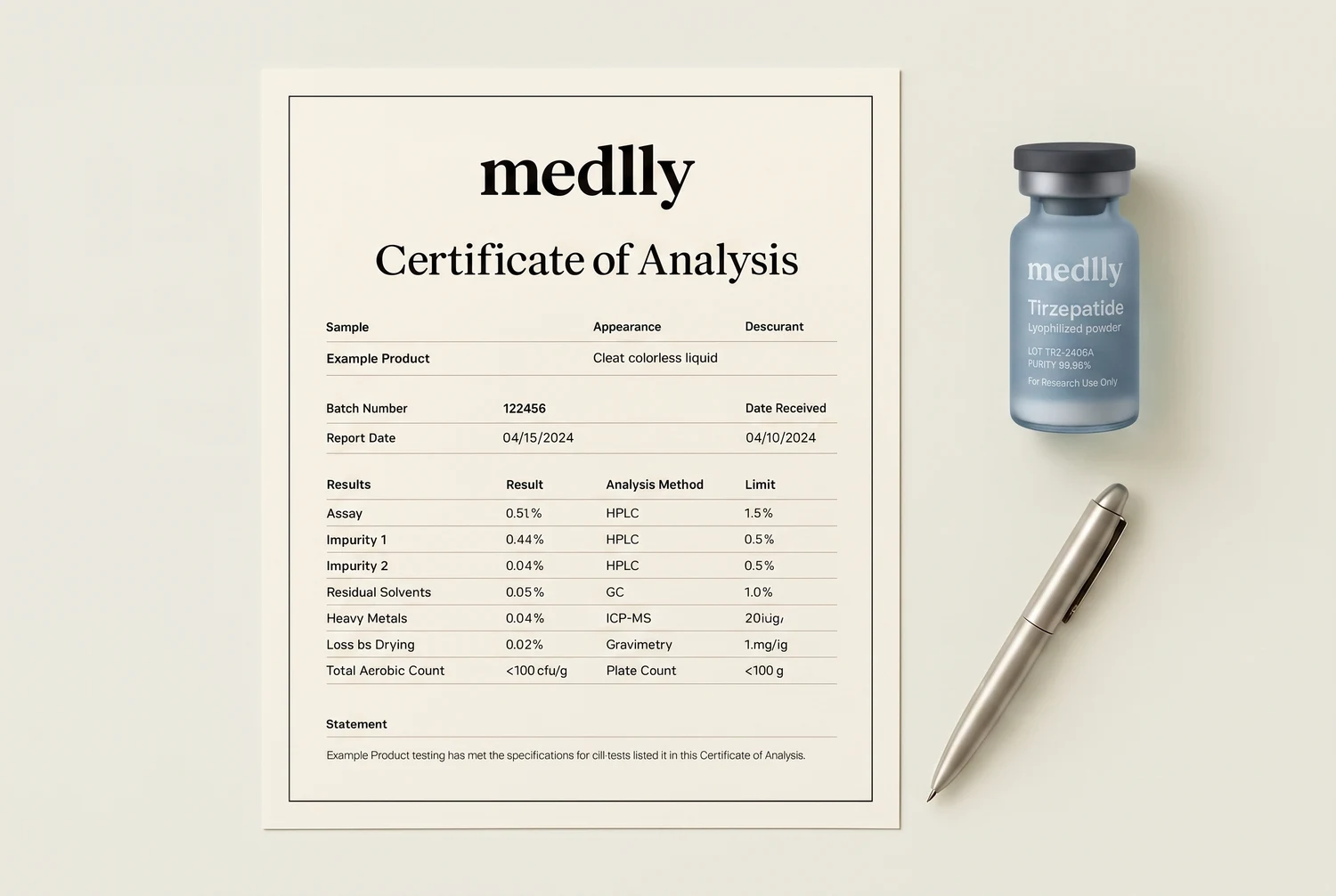
Alongside its measurements, a Certificate of Analysis carries dates: when the lot was manufactured, when it was released after testing, and a retest date. The retest date is the one most often asked about. Like everything else on the page, these dates describe one specific lot.
Manufacture and release dates
The manufacture date records when the lot was produced; the release date records when it passed testing and was made available. The interval between them is the time analysis took. Both are factual records of the lot's history, anchored to its lot number.
What a retest date means
A retest date is the point at which a lot should be re-evaluated rather than assumed unchanged. It is not the same as a hard expiry: it marks when confirmation is appropriate, based on how the material is expected to behave in storage. It speaks to when to look again, nothing more.
Why dating is per lot
Because each lot is made and tested separately, its dates belong to that lot alone. A retest date on one certificate does not transfer to another lot of the same compound. Reading the dates next to the lot number keeps them tied to the correct material.
Using the dates with storage
Dates are most useful read together with the storage conditions on the product page. Stable storage is what a retest interval assumes, so keeping a lot cold and sealed is what keeps its dated documentation meaningful over time.