Water content and the Karl Fischer test
Water content is one of the measures on the panel for lyophilized material. Here is what it tracks, how the Karl Fischer titration measures it, and how the result is reported.
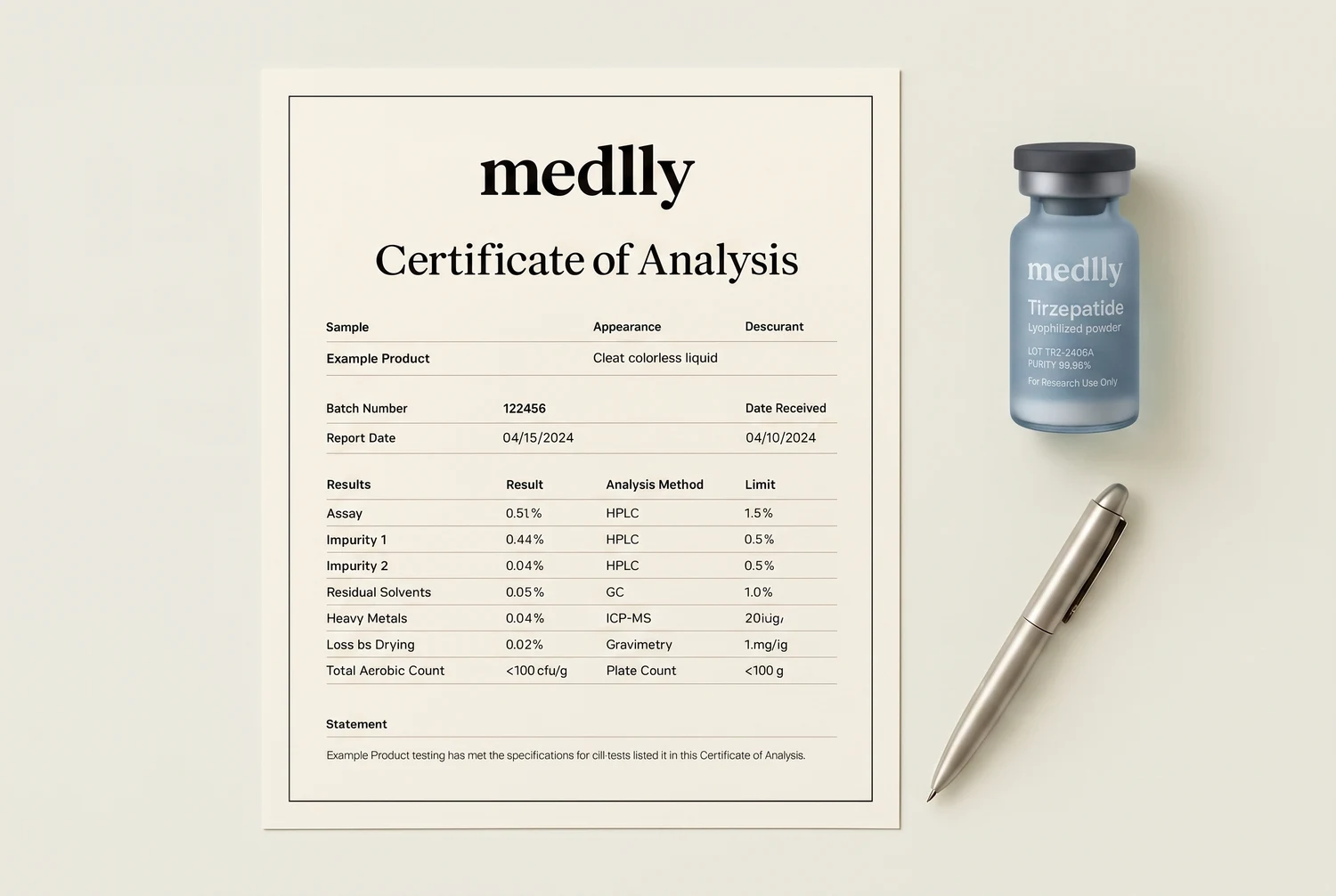
For lyophilized material, water content, or residual moisture, is one of the measures on the analytical panel. Lyophilization removes most water so the material stores stably, and the water-content figure documents how much remains. Like the other rows, it is a measured value reported against a predefined limit.
Why residual moisture is tracked
Dry peptides are kept dry for stability, so the amount of water left after lyophilization is worth documenting. A low residual-moisture figure describes the state of the lot as supplied. The number is descriptive: it characterizes the material, and says nothing about use.
What the Karl Fischer titration does
The standard method is the Karl Fischer titration, a chemical technique highly specific to water. It reacts with the water present in a sample and quantifies it, which makes it well suited to the small amounts of moisture left in a freeze-dried material. That reaction is what the assay measures.
How the result is reported
Water content appears as a percentage by weight, set against a maximum limit in the specification and marked within or outside it. Because a supplied solution is already in water, this row applies to lyophilized powders rather than to a liquid, where a different compendial measure is used instead.
Where it fits on the panel
Identity and purity describe what the compound is and how much is present; appearance and water content describe the physical state of a lyophilized lot. Reading water content alongside the others completes the picture of a dry material as it was made and tested.